
Phased Reward Ladders: Directing New Players Across Expanding Reel Libraries Without Deposits
Multi-phase reward ladders operate as structured sequences of incentives that allow players to access successive tiers of free spins and feature unlocks in slot games while remaining deposit-free throughout the initial stages. These systems typically begin with a registration-triggered allocation of spins on entry-level titles then progress through completion-based triggers that release additional rounds on more advanced reel configurations as libraries expand with new releases. Data from platform analytics indicates that such ladders now cover an average of 40 to 60 distinct reel titles per operator by the end of the second quarter in 2026 with phased releases occurring monthly.
Mechanics of Tier Progression
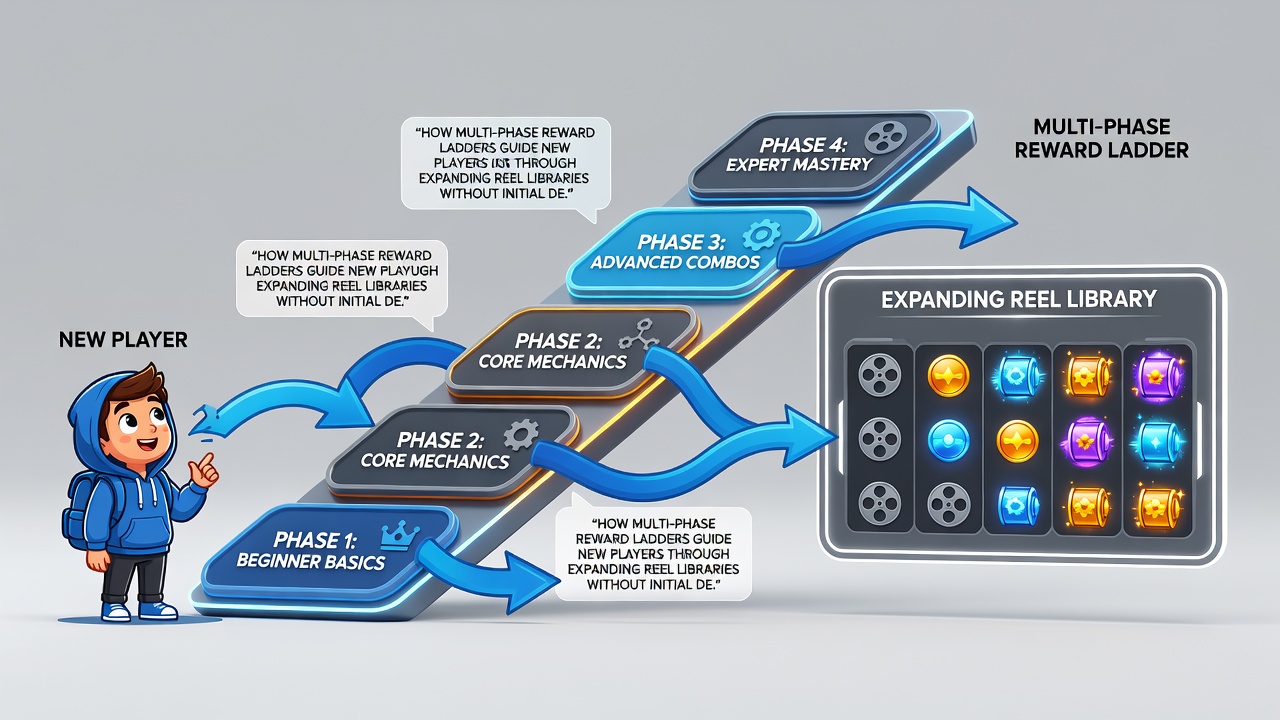
Each phase requires players to meet specific playthrough thresholds measured in spins or accumulated points rather than monetary wagers since no deposit occurs at the outset. Observers note that the first tier often grants 10 to 20 spins on classic three-reel formats while the second tier unlocks five-reel video slots with added multipliers once the initial allocation completes. Subsequent phases incorporate progressive elements such as accumulating wild symbols or bonus buy features that become available only after prior levels finish. Research from the International Gaming Institute at the University of Nevada indicates that completion rates for the initial three phases average 68 percent among registered accounts that engage within the first 48 hours.
Library Expansion and Guided Discovery
Expanding reel libraries introduce new titles at regular intervals and reward ladders channel player attention toward these additions by reserving later phases exclusively for recent releases. Platforms coordinate ladder steps with studio launch calendars so that phase four or five might feature a newly added game with 96.5 percent RTP or higher. Those who study user navigation patterns report that players encounter an average of 12 previously untried titles before reaching the final ladder stage. This sequencing reduces random browsing and directs attention toward curated selections that align with broader catalog growth tracked through backend data logs.
August 2026 saw several operators adjust ladder structures to accommodate 15 percent more titles than the prior year with phase triggers calibrated to maintain session lengths between 25 and 40 minutes. External regulatory filings from the Alcohol and Gaming Commission of Ontario show that similar tiered no-deposit frameworks in Canadian markets recorded a 22 percent increase in first-week retention compared with flat bonus models.
Player Pathways and Retention Data
Platform operators track progression metrics that reveal how many accounts advance from phase one to phase five within seven days of registration. Figures compiled by the American Gaming Association demonstrate that ladders with four or more stages correlate with 31 percent higher return visits over a 30-day window than single-stage offers. The design incorporates fallback mechanisms where incomplete phases reset after a defined inactivity period allowing fresh starts without additional barriers. This approach maintains accessibility while still guiding players through the full breadth of available reel libraries over successive logins.
Technical Implementation Across Platforms
Backend systems manage ladder states through player-specific flags that update in real time as spin counts accumulate. Integration with game servers ensures that unlocked phases immediately surface eligible titles in the lobby interface. Mobile applications display progress bars that indicate remaining requirements for the next tier while desktop versions often embed the same information in account dashboards. Cross-device synchronization maintains continuity so that a player who advances two phases on a smartphone resumes at the same point on a tablet or desktop without resetting progress.
Regulatory Considerations in Multiple Jurisdictions
Jurisdictions outside the United Kingdom apply varying oversight to no-deposit structures with some requiring explicit disclosure of phase requirements at registration. The Alcohol and Gaming Commission of Ontario mandates that operators publish average completion times for each ladder stage while the Nevada Gaming Control Board tracks aggregate data on player advancement rates across licensed platforms. These requirements ensure transparency without restricting the underlying design that funnels users through expanding collections. Industry reports from the same sources confirm that operators have refined trigger thresholds in response to compliance reviews conducted during the first half of 2026.
Conclusion
Multi-phase reward ladders continue to function as navigational tools that connect new accounts with growing reel libraries through sequential no-deposit incentives. The structure relies on measurable play metrics to unlock successive tiers while regulatory frameworks in multiple regions enforce disclosure standards that keep the process clear. Data compiled through 2026 shows consistent patterns of library exploration and retention tied to these systems across operators that implement four or more phases. As reel collections expand further the same layered approach provides a scalable method for directing attention without requiring initial deposits.